

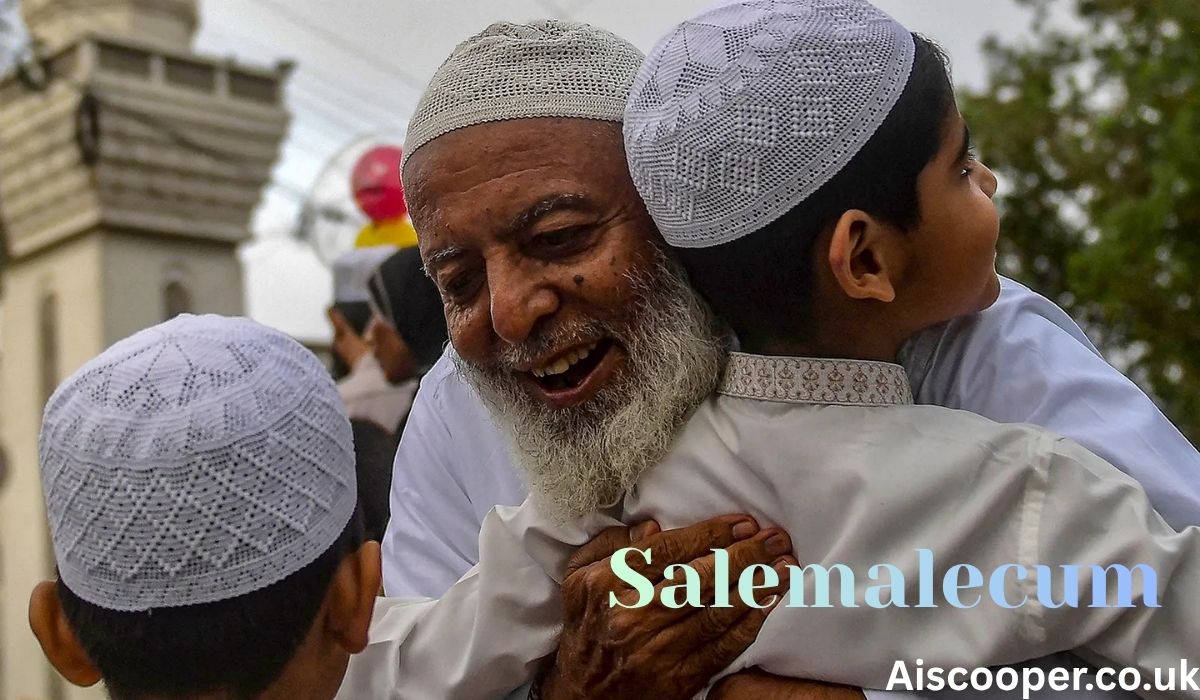
Words often travel farther than the people who first spoke them. They cross countries, move through family stories, appear in songs and films, and slowly change shape as new voices adopt them. That is exactly what has happened with Salemalecum and Assalamualaikum. Many people see these two forms online and wonder whether they mean the same thing, which one is correct, and why the spelling looks so different. The answer is simple on the surface, but rich in cultural meaning once you look deeper. Both forms point to a greeting connected to peace, courtesy, and human connection.
For many readers around the world, this greeting may be familiar even if the spelling is not. Some learned it from Muslim friends, some heard it in daily life, and others first came across it through social media, films, or travel. In many homes and communities, this is not just a phrase spoken out of habit. It carries feeling, belief, and respect. That is why spelling matters here. A small change in letters can reflect accent, region, education, or casual online use. Understanding that difference helps people use the greeting more confidently and more respectfully.
This article explains the meaning of the greeting, the story behind the two spellings, and the way the phrase is used in real life. It also looks at how pronunciation changes across regions, why informal spellings become popular, and which form works best in writing. For a global audience, this is not only a language topic. It is also a way to understand how culture and communication meet in everyday words.
Table of Contents
ToggleH2: What Salemalecum and Assalamualaikum Mean
At the center of both spellings is the same core message: peace. Assalamualaikum is widely understood to mean “peace be upon you.” It is a greeting used by Muslims across many regions of the world, and it carries much more warmth than a simple hello. It offers goodwill before any other conversation begins. In many families, it is the first word spoken when entering the house, meeting elders, calling a friend, or joining a gathering. It creates a tone of kindness from the very start.
The form Salemalecum usually appears when the greeting is written the way it sounds to someone’s ear. This is common when a phrase moves from one writing system into another. Arabic uses its own script, so when people try to write the greeting in English letters, they often produce different spellings. Some stay close to the original structure, while others become more phonetic and informal. That is how a version like Salemalecum becomes common in comments, captions, chat messages, and casual speech.
Even though the spellings differ, the heart of the greeting remains the same. It expresses peace, safety, and good intention toward another person. That is why the phrase remains respected across cultures and generations. It is brief, but it carries a complete social message. It says that the speaker comes forward with calm, respect, and a wish for well-being.
H2: Why the Spelling Changes So Much
When people ask why Salemalecum looks so different from Assalamualaikum, the real answer lies in how language changes during travel. Arabic sounds do not always map neatly into English letters. Some speakers hear the opening sound as “sa,” others hear “asa,” and still others shorten the phrase in everyday use. Over time, people begin writing what feels natural in their own accent or community. That is why one greeting can appear in many forms without losing its general meaning.
Regional influence also plays a major part. A speaker in South Asia may say the phrase a little differently from a speaker in Egypt, Nigeria, or the United States. The pace of speech, local tongue habits, and mother language patterns all shape what listeners hear. Then, once that heard version gets typed into a search bar or social media post, it becomes visible to thousands of others. Soon, the informal spelling starts to look normal simply because it appears so often.
Digital culture has made this even stronger. People rarely stop to check formal transliteration when posting a quick message or greeting someone in a comment. They write quickly, often based on memory or sound. In that environment, Salemalecum can spread easily. It feels familiar, simple, and readable to those who have heard the phrase spoken more than they have seen it written. Still, popularity does not always equal accuracy, which is why the standard form matters in educational and public writing.
H2: Which Form Is Correct in Formal Writing
In careful writing, Assalamualaikum is the better and more accepted form. It is the spelling most readers will recognize in religious discussion, educational material, cultural writing, and polished articles. It stays closer to the original Arabic phrase and gives readers a clearer path to proper pronunciation and understanding. If the goal is accuracy, respect, and clarity, this version should lead.
That does not mean Salemalecum is meaningless or wrong in every setting. It simply belongs more to casual and phonetic use. It may appear in dialogue, personal messages, user comments, or writing that reflects everyday speech. A writer may also use it when explaining spelling differences or discussing how the phrase appears online. In those cases, it can be useful because it reflects how real people often type and hear the greeting.
Still, when speaking to a broad audience, standard spelling matters. Readers from outside Muslim communities may not realize both forms refer to the same greeting. Some may think Salemalecum is slang, a different expression, or even a separate language. Using Assalamualaikum in formal content reduces confusion and builds trust with readers who want reliable information. It respects both the language source and the audience.
H2: The Cultural Story Behind the Greeting
This greeting has a long life story. It began in Arabic-speaking settings where greetings carried social and spiritual value. Over time, it moved with people through trade, migration, family life, scholarship, and travel. It spread into communities far beyond the Arab world and became part of daily speech in many countries. Today, it is heard in homes, schools, mosques, shops, markets, and public gatherings across continents.
What makes this phrase special is that it stayed alive not through textbooks alone, but through people. Children hear it from parents before they ever see it written. Neighbors exchange it at the gate. Friends use it at the start of a call. Elders teach it through habit rather than instruction. That kind of living transmission gives the phrase deep emotional weight. It is not just memorized language. It is inherited behavior.
As the greeting moved across the world, its spelling changed in writing, but its social role stayed steady. It remained a sign of respect, peaceful intent, and shared courtesy. That is why even a nonstandard spelling like Salemalecum still points back to something older and more rooted. It is part of the wider journey of a phrase that crossed borders while keeping its core message intact.
H3: Common Variations People Often See
There are several versions of this greeting in English writing, and each one tells a small story about sound, habit, and region. Assalamualaikum is the standard form used most often in articles and formal writing. As-salamu alaykum is another close and careful transliteration that many learners see in books. Salaam alaikum and Salam alaykum are shorter forms that still remain recognizable and readable to many English speakers.
Then there are more casual spellings such as Salemalecum, Salamalekum, or similar versions typed quickly in online spaces. These forms show how people often write by ear rather than by rule. They are useful to know because readers may encounter them often, especially in user-generated content. Still, these versions are best understood as informal spellings, not as the preferred standard.
Knowing these differences helps both writers and readers. It allows people to recognize the greeting in many forms while still understanding which version works best in public-facing content. That balance is important because it respects real language use without losing sight of accuracy and tradition.
H2: How the Greeting Is Used in Everyday Life
In everyday use, this greeting does more than open a conversation. It sets a tone. In many Muslim communities, saying it first is a sign of good manners. A person may greet their family with it when entering the home, say it when meeting a shopkeeper, or begin a community speech with it. Its role is social, but also personal. It softens the start of an exchange and frames the moment with peace.
The greeting is also flexible. It can be used in formal gatherings, casual visits, private messages, and public events. That broad use is one reason it has survived so well across time and place. It belongs equally to daily routine and to meaningful occasions. It may be spoken softly between two people or announced warmly before a crowd. In both cases, it carries dignity without sounding distant.
Online usage adds another layer. On social media and messaging apps, spellings often become shorter, looser, and more creative. That is where Salemalecum appears often. It reflects quick typing, spoken memory, and informal communication habits. While that is understandable, people writing for blogs, articles, education, or wider public audiences usually do better with the standard version. It keeps the meaning clear and the tone respectful.

H2: Pronunciation, Listening, and Global Understanding
Pronunciation is a big reason so many spelling versions exist. Most English speakers do not grow up learning Arabic sounds, so they naturally write the phrase in the way they hear it. One person may hear the opening as “asa,” another as “sala,” while someone else blends the words together into something close to Salemalecum. None of this is surprising. It is how spoken language often works when borrowed across cultures.
For global readers, the challenge is not only pronunciation but recognition. Someone may have heard the greeting many times but not know that the formal written form is Assalamualaikum. Another reader may know the standard spelling but not realize that Salemalecum points to the same phrase. This gap matters in content writing because people often arrive with different levels of familiarity. Good writing closes that gap without making the topic feel heavy or technical.
A helpful way to think about it is this: pronunciation may shift, but meaning should stay clear. Writers who explain the relationship between the forms help readers feel included rather than confused. That is especially important in multicultural spaces where people meet language from many traditions. Clear, kind explanation always serves the reader better than assuming everyone already knows the background.
H2: The Proper Reply and Why It Matters
The traditional reply to this greeting is Wa Alaikum Assalam, meaning “and upon you be peace.” This response completes the exchange and makes the greeting mutual. Instead of peace moving in one direction, it returns with the same warmth. That is why the phrase feels more meaningful than a one-word hello. It creates a small act of shared respect between two people.
In many families and communities, the reply is taught early and used often. Children learn it by hearing adults repeat it in daily life. The pattern becomes natural: one person offers peace, the other returns it. This simple exchange helps shape manners and sets a calm tone in conversation. Even when spoken quickly, the meaning remains generous.
For people outside Muslim communities, knowing the reply can be helpful and respectful. It shows understanding, but more than that, it shows attention. A greeting is one of the easiest ways to honor another person’s culture. Even when pronunciation is not perfect, sincerity usually matters more than performance. That is one reason this greeting continues to build bridges across different backgrounds.
H2: When to Use Salemalecum and When to Use Assalamualaikum
The best choice depends on context. If you are writing an article, teaching readers, creating a biography, describing culture, or publishing polished content, Assalamualaikum is the right choice. It is clearer, more accepted, and more faithful to the original phrase. It also helps readers who may want to learn more, since they are more likely to find matching forms in books and educational materials.
If you are discussing everyday spelling habits, quoting casual language, or explaining what people often type online, then Salemalecum can be mentioned naturally. It has value as a real-world spelling that many people recognize. Ignoring it would leave out part of how language works in daily life. Still, it should usually appear as a variation, not as the main form.
A thoughtful writer can do both things at once: acknowledge the informal spelling while guiding readers toward the standard one. That approach respects real speech and real people without giving up clarity. It also reflects the truth that language is both lived and learned. Some forms belong to habit, while others belong to careful writing. Understanding that difference is what makes communication stronger.
Conclusion
The difference between Salemalecum and Assalamualaikum is small in appearance but important in meaning, context, and usage. Both forms point to a greeting rooted in peace, kindness, and respect. Yet one is informal and phonetic, while the other is the clearer and more widely accepted written form. For readers, writers, and anyone interested in language, that distinction helps make sense of what they hear, see, and use.
This topic also tells a bigger story about how words move through the world. A greeting born in one language can travel through many cultures, gather new spellings, and still keep its original heart. That is what happened here. The letters may change, but the intention stays warm. People still use this greeting to begin with goodwill, and that is part of why it remains so powerful.
For most public writing, Assalamualaikum is the better choice. It offers clarity, respect, and a closer link to the phrase’s origin. At the same time, understanding Salemalecum helps readers recognize how real people adapt language in everyday life. When both forms are understood in context, the result is not confusion but connection. And for any greeting built on peace, that feels exactly right.
Frequently Asked Questions
What does Salemalecum mean?
Salemalecum is an informal spelling of a greeting that means peace be upon you.
It reflects casual writing based on sound rather than the standard Arabic-based form.
Is Assalamualaikum more correct than Salemalecum?
Yes, Assalamualaikum is the more accurate and widely accepted spelling in English.
It is the better choice for formal writing, teaching, and public communication.
Why do people write Salemalecum online?
Many people type the phrase the way they hear it in everyday speech.
That is why casual spelling variations often spread quickly on social platforms.
What is the proper reply to this greeting?
The common reply is Wa Alaikum Assalam, which returns the same wish of peace.
This response makes the greeting mutual and completes the exchange politely.
Can non-Muslims say Assalamualaikum?
Yes, they can use it respectfully in the right setting and with good intention.
It is often welcomed as a kind and thoughtful sign of respect.
Are Salemalecum and Assalamualaikum the same greeting?
Yes, both point to the same greeting, though one is more informal in spelling.
The main difference is accuracy, not the basic meaning behind the phrase.
Which spelling should I use in an article title?
Use Assalamualaikum in the main title if clarity and correctness matter most.
You can mention Salemalecum in the article as a common alternate spelling.