

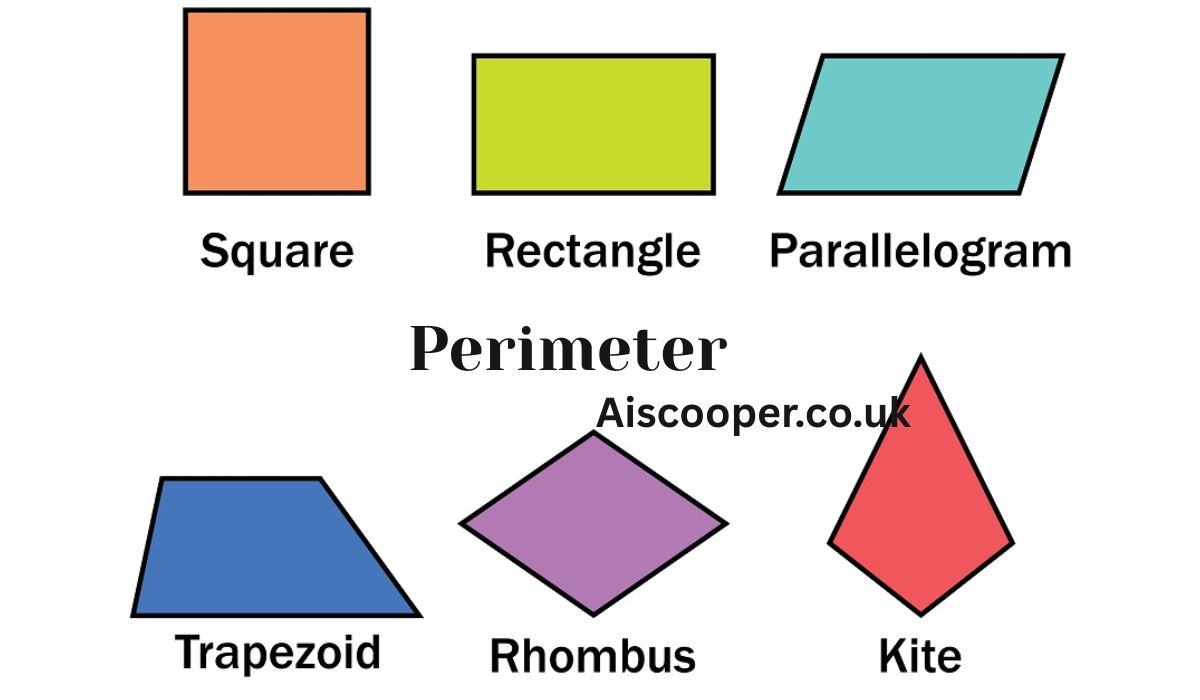
Math becomes much easier when a big idea can be tied to something you can picture in real life. The outer edge of a shape is one of those ideas. You see it in a fence around a yard, a frame around a mirror, a border around a notebook, and the painted lines around a sports court. In geometry, the total distance around that outer edge is called the perimeter. Once you understand that one idea clearly, many shape problems stop feeling hard and start feeling practical. This topic is often taught early, but it stays useful because it supports measurement, problem-solving, and spatial thinking for years.
For many learners, the hardest part is not the math itself. It is knowing what the question is really asking. Some problems ask for the space inside a figure, while others ask for the distance around it. This article focuses on the second one. It will walk through the meaning of perimeter, the simple steps to solve it, the formulas for common shapes, and the best way to handle shapes that do not look neat or equal. The goal is to make the lesson feel clear, useful, and easy to remember.
Table of Contents
ToggleWhat Perimeter Means in Everyday Life
The best way to understand this concept is to imagine walking around the border of a flat shape. If you begin at one corner, move along every side, and return to the starting point, the total distance you walked is the perimeter. It measures only the boundary. It does not tell you how much space is inside the shape, and that difference matters. In geometry, this idea applies to many two-dimensional figures, including rectangles, squares, triangles, pentagons, and other polygons.
This skill matters because real life is full of boundaries. A gardener may need the outside measurement of a flower bed before buying edging. A parent may need the border of a bulletin board before adding decorative trim. A painter may need to tape the edges of a wall feature. A builder may need the outside distance of a room before placing molding. In each case, the person is working with the outline, not the inside surface. That is why perimeter is one of the most useful measurement ideas in basic math.
Learning this topic also helps students become better at observation. They start to notice how shapes are built, how side lengths repeat, and how a figure can be broken down into parts. Even before moving into harder geometry, this one idea teaches accuracy, patience, and careful reading. Those habits matter in school, but they also matter outside the classroom, where measurements need to be correct and mistakes can cost time or money.
The Simple Rule Behind Every Perimeter Problem
No matter how easy or hard a shape looks, the main rule stays the same: add the lengths of all the outer sides. That is the full process in its most basic form. If a shape has three sides, add the three sides. If it has six sides, add the six sides. This rule works whether the figure is regular, irregular, large, small, or split into odd angles. As long as you are measuring the full outside boundary, you are finding the right value.
This matters because students often think they need a special trick for every figure they see. In truth, formulas only help speed up the same basic idea. They do not replace it. If you understand that the total edge length is found by adding all outside sides, you already know the core of the topic. That understanding gives you a method you can trust even when the shape looks unusual or when a formula is not obvious.
A good habit is to trace the figure with your eyes or finger before doing any math. This small step keeps the goal clear. It reminds you that the answer comes from the full border. It also lowers the chance of skipping a short side, counting an inside line by mistake, or mixing the problem up with area. Strong geometry work often begins with that simple visual check.
Perimeter Formulas for Common Shapes
Some shapes appear so often that using a shortcut makes sense. These formulas save time, but each one still comes from adding the outer sides. Once students see that connection, the formulas become easier to remember and easier to use with confidence.
- Square: 4 × side length
- Rectangle: 2 × (length + width)
- Triangle: side 1 + side 2 + side 3
- Regular polygon: number of sides × side length
- Circle: the outside distance is called circumference, not perimeter, but it serves a similar purpose
A square is one of the easiest shapes because all four sides are equal. If one side is 6 units, the full outside distance is 24 units. A rectangle has two equal lengths and two equal widths, so the work becomes faster when you add length and width first, then multiply by two. A triangle does not need a shortcut unless the sides repeat in a special pattern. Most of the time, you simply add the three side lengths.
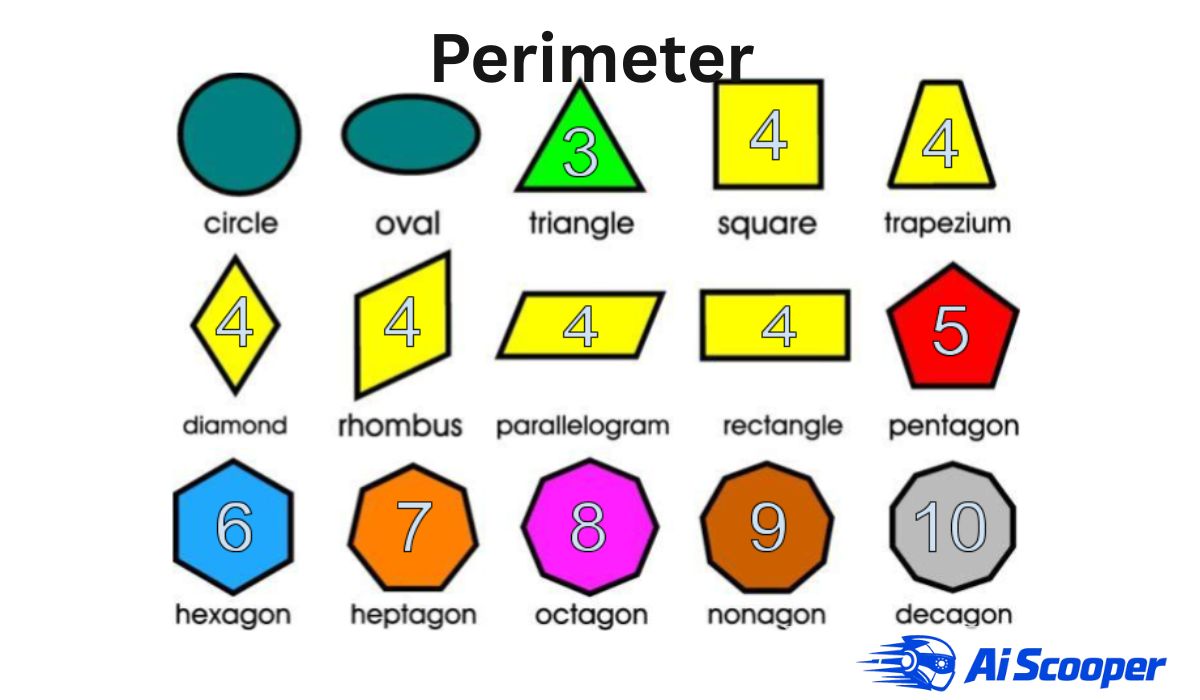
Regular polygons follow a nice pattern too. A regular pentagon has five equal sides, and a regular hexagon has six equal sides. If each side of a regular hexagon is 4 centimeters, the total distance around it is 24 centimeters. Once these patterns become familiar, learners can move through common measurement problems more quickly without losing accuracy.
How to Find the Perimeter of a Square, Rectangle, and Triangle
The square is usually the first shape students master. Because all sides are equal, one side length gives you everything you need. If a square has a side length of 8 inches, then the total distance around it is 8 + 8 + 8 + 8, which equals 32 inches. The shortcut 4 × 8 gives the same result. This makes the square a great shape for building early confidence.
A rectangle is also simple once you notice that opposite sides match. Imagine a rectangle with a length of 10 feet and a width of 3 feet. The total boundary is 10 + 3 + 10 + 3, which equals 26 feet. Some students like to picture the two long sides first and then the two short sides. Others prefer the formula 2 × (10 + 3). Both methods work well, and both come from the same basic rule of adding every outside side.
A triangle can look different depending on the type. Some are equal on all sides, some have only two equal sides, and some have three different side lengths. The process stays the same. You add all three sides. For example, a triangle with sides of 5, 7, and 9 yards has a total edge length of 21 yards. There is no need to make it harder than that. When the sides are known, the answer comes from simple addition.
These three shapes matter because they form the base for many larger geometry lessons. Once a student can find the boundary of a square, rectangle, and triangle with ease, more complex figures start to feel less intimidating. Those basic skills carry over into floor plans, map drawings, design work, and test questions that combine several shapes in one figure.
How to Measure Regular and Irregular Polygons
A regular polygon is friendly because its side lengths match. That means you can multiply instead of adding one side at a time. A regular octagon with side lengths of 3 meters has a total outside distance of 8 × 3, or 24 meters. This repeated pattern makes regular polygons easier to solve than they may appear. Once you know how many sides the shape has and how long one side is, the rest is straightforward.
Irregular polygons require a little more attention, but they do not require harder math. The key is to go side by side around the figure. Write each length in order as you move around the outline. This approach helps you stay organized and makes it easier to see whether you missed anything. Even shapes with many sides can be solved calmly when you treat them one edge at a time.
Some irregular figures look like a mix of simple shapes joined together. A step-like shape or an L-shaped figure may seem confusing at first glance, but the outside boundary still gives you the path you need. Ignore the inside sections and focus only on the full outer border. If the figure is made of horizontal and vertical lines, it often helps to mark matching lengths so you can find missing values before adding everything.
This is where patience matters most. Irregular shapes usually test attention, not advanced skill. Students who rush are more likely to skip a side or count one twice. Students who trace carefully and label clearly usually get the right answer, even when the shape looks busy or uneven.
Missing Side Lengths and Multi-Step Problems
Not every problem gives you all the measurements right away. In many geometry questions, one or two side lengths are missing, and you must figure them out before finding the full boundary. This is common in rectangles, compound shapes, and diagrams built from straight lines. The good news is that these problems can still be solved with logic and structure.
For example, if a large shape is made from connected rectangles, some opposite horizontal lengths may match, and some vertical sections may combine to equal another side. When students notice those relationships, missing measurements become easier to find. A good method is to compare the full width on one side of the figure with the split parts on the opposite side. The same idea works for height. Once the missing side is known, you return to the main rule and add the outer edges.
These problems teach more than measurement. They train students to slow down, read diagrams carefully, and use what the figure already shows. That is a helpful skill in all areas of math. Instead of guessing, strong problem solvers look for balance in the shape. They use the structure of the figure to fill in the missing part, then complete the total distance around the outside.
With practice, multi-step problems become less stressful. The student learns not to panic when a length is not shown. Instead, the student starts asking better questions: Which sides match? Which small parts combine into a full side? Where does the outer boundary begin and end? Those questions make the work more organized and much more accurate.
Perimeter vs. Area vs. Circumference
One reason students struggle with shape measurement is that three related ideas often appear close together. Perimeter measures the distance around a polygon. Area measures the amount of space inside a shape. Circumference measures the distance around a circle. These ideas belong to the same family of measurement, but they answer different questions and use different formulas.
Think about a rectangular garden that is 9 feet long and 4 feet wide. The outside edge is found by adding the sides, so the perimeter is 26 feet. The inside space is found by multiplying length by width, so the area is 36 square feet. One answer tells you how much border is needed. The other tells you how much surface is covered. That difference is important in both schoolwork and daily decisions.
Circles add another layer because they do not have straight sides. Their outer distance is called circumference, not perimeter. Still, the purpose is similar because both measure the boundary. When students understand that border and surface are different ideas, they become much more confident. A simple question can help: Are you finding the edge, the inside space, or the distance around a circle? Once that is clear, the right method usually follows.
Common Mistakes and Smart Ways to Avoid Them
A very common mistake is adding only some of the sides instead of all of them. This often happens with irregular figures, where a small segment is easy to miss. Another common error is using the area formula by accident. Students may see a rectangle and multiply the sides, even when the problem asks for the outside distance. These mistakes happen more from rushing than from not understanding the topic.
Another issue comes from units. If a side length is given in centimeters, the answer should also be in centimeters. If measurements are mixed, they must be changed to the same unit before adding. Students also sometimes count an inside line that is not part of the outer boundary. That error changes the total and can lead to an answer that looks neat but is still wrong.
The smartest way to avoid mistakes is to build a routine. First, read the problem carefully. Second, trace the outside border. Third, label the side lengths. Fourth, check for any missing sides. Fifth, add only the outer edges and write the answer with the correct unit. This routine takes only a little more time, but it greatly improves accuracy.
Checking your work also matters. After solving, ask yourself whether the answer seems reasonable. If a small square ends up with a very large total, or if a long rectangle has a surprisingly tiny result, that is a sign to look again. Geometry rewards careful thinking, and a quick check at the end can save many points on classwork or tests.
Why This Skill Matters Beyond the Classroom
The value of perimeter goes far beyond worksheets. It helps people make plans, buy supplies, and understand the shape of spaces around them. Someone installing a border around a garden bed needs the total edge length. Someone hanging trim around a poster or chalkboard needs the outside measurement. Even a person measuring ribbon for a craft project is working with the same basic idea.
This kind of math also supports visual thinking. It helps learners notice patterns, compare shapes, and understand how boundaries define space. That skill becomes useful in home design, carpentry, sewing, landscaping, sports layout, and architecture. It may begin as a simple school lesson, but it builds a way of thinking that applies in many settings.
There is also a confidence benefit. Students who understand how to handle the edges of shapes often feel less nervous about geometry as a whole. They begin to trust their process. They see that math does not always require a hard trick or a hidden rule. Sometimes it simply asks for careful observation and steady steps. That lesson can change how a learner feels about the subject overall.
In many ways, the journey of learning perimeter is the story of learning to see structure. A child starts by counting sides one by one. Later, that same learner notices patterns, uses shortcuts, solves missing-side problems, and applies the idea to real objects. That growth is what makes this topic important. It is simple at the start, but it opens the door to stronger mathematical thinking.
Final Thoughts
Finding the perimeter of any shape becomes much easier once the main idea is clear: measure the full distance around the outside. Whether the figure is a square, rectangle, triangle, regular polygon, or an irregular shape, the method always begins with the boundary. Formulas make the work faster, but they do not replace understanding. The real strength comes from knowing what the question asks and following the outer edge with care.
This topic is one of the best examples of useful math because it connects school learning to daily life so naturally. It appears in design, building, decorating, sports, crafts, and planning. More importantly, it teaches students how to think with structure, how to read shapes closely, and how to solve problems step by step. With practice, even complex figures become manageable, and the outside edge of any shape starts to feel easy to measure.
Frequently Asked Questions (FAQs)
1. What is perimeter in simple words?
It is the total distance around the outside edge of a flat shape.
You find it by adding all the outer side lengths together.
2. How do you find the perimeter of a rectangle?
Add the length and width, then double that total for all four sides.
You can also add length + width + length + width directly.
3. What is the perimeter of a square?
Multiply one side length by 4 because all four sides are equal.
If one side is 5 units, the full boundary is 20 units.
4. How is perimeter different from area?
Perimeter measures the border of a shape, while area measures the inside space.
One uses linear units, and the other uses square units.
5. How do you solve perimeter for an irregular shape?
Trace the full outer edge and add every outside side one by one.
If a side is missing, use the figure to find it before adding.